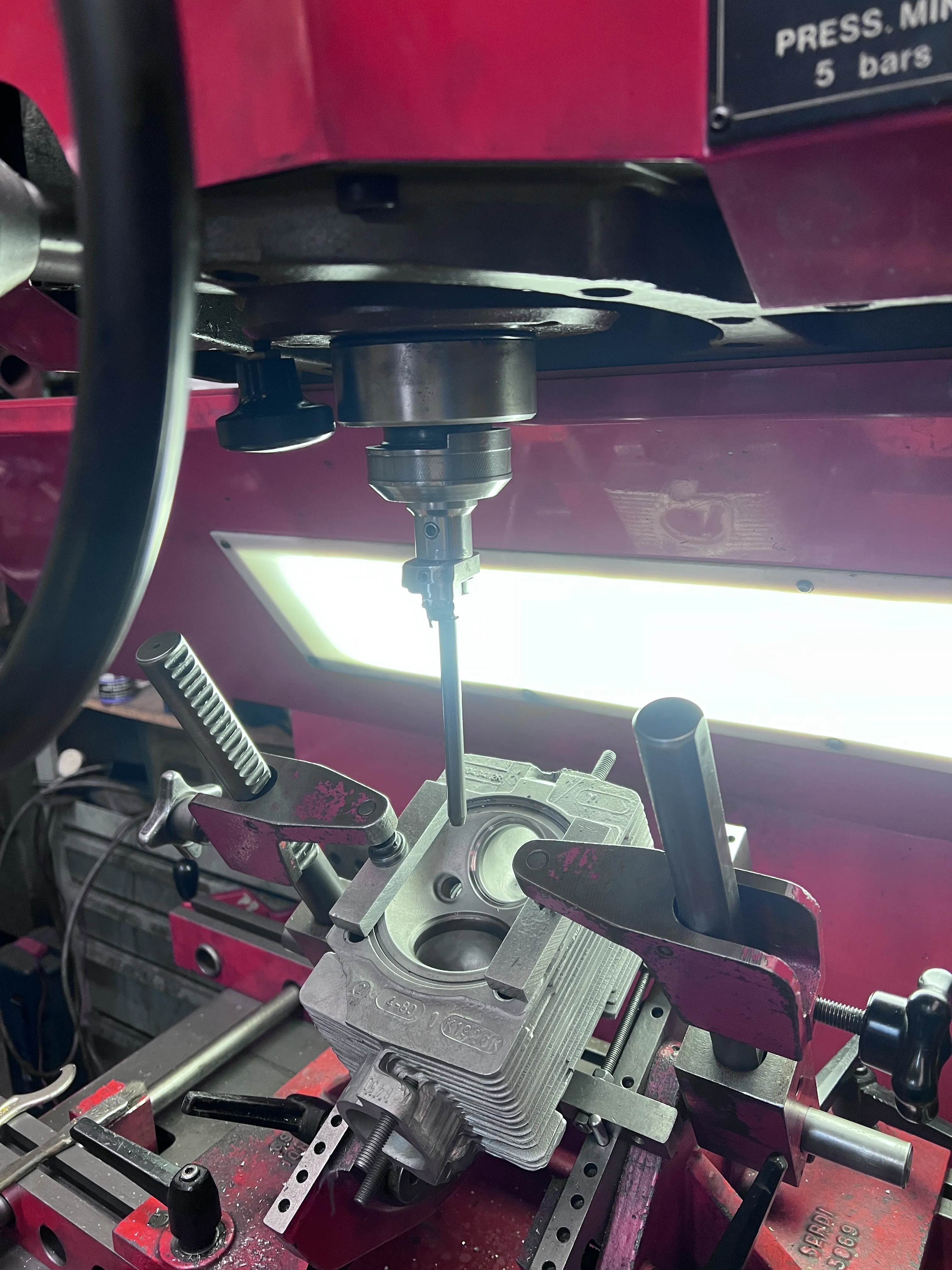
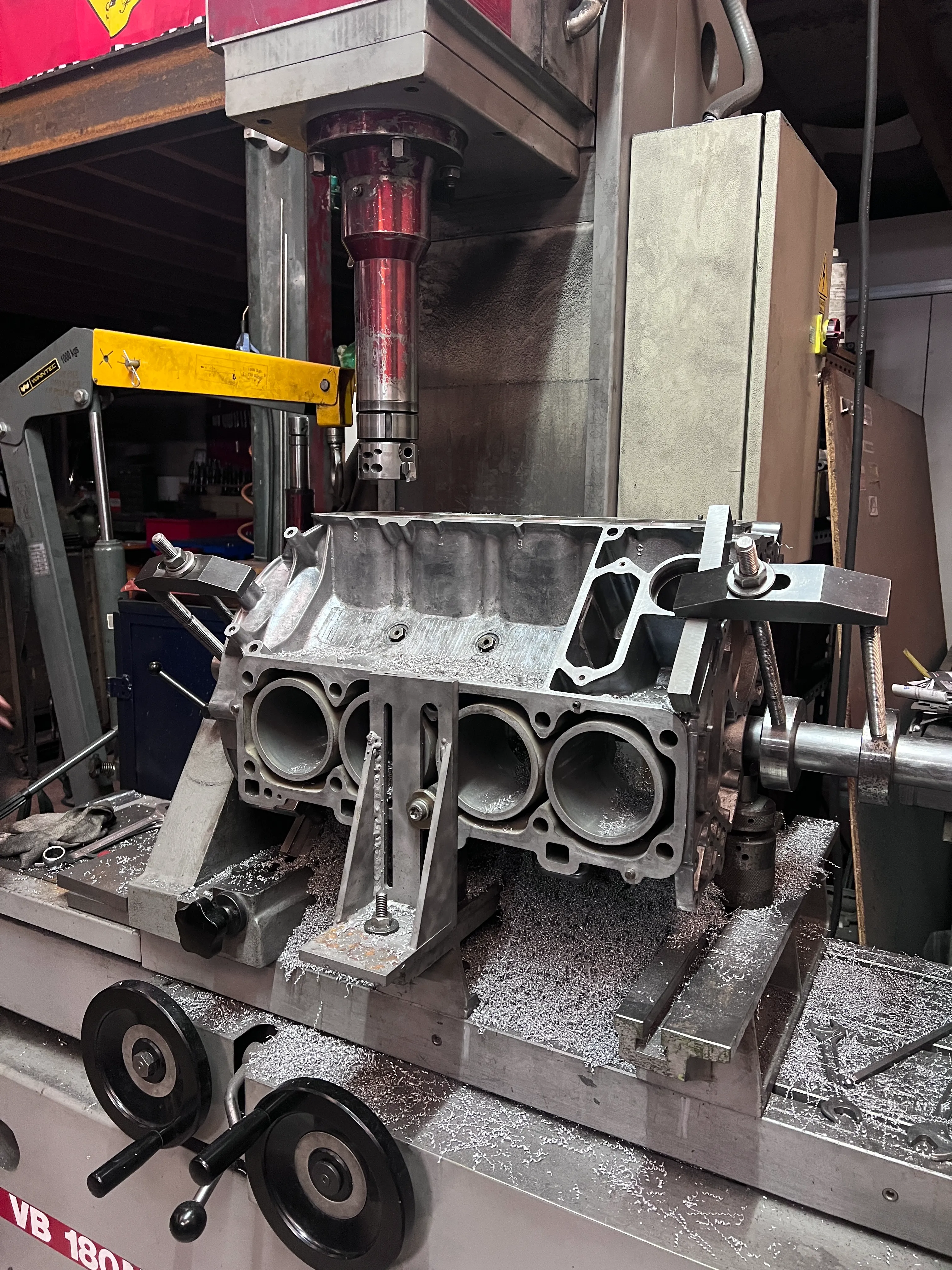
Every project is different, but some questions come up regularly. Here are a few pointers to help you understand how we work and prepare your project.
How much does a full engine rebuild cost?+
The cost depends above all on the engine’s actual condition, which parts can be kept, which need replacing or remaking, and its intended use. A road engine, a historic engine and a competition engine do not necessarily share the same requirements. Where necessary, we begin by dismantling, measuring and inspecting components before preparing an accurate quotation. If this diagnostic stage involves specific work, its cost is agreed with you in advance.
How long does it take?+
A single machining operation can generally be completed relatively quickly, within a few days. A complete rebuild takes longer, particularly when parts need to be sourced, ordered or remade. For older or uncommon engines, sourcing can sometimes account for a significant part of the overall lead time. We therefore aim to agree a realistic schedule from the outset and keep you informed when an external factor changes it.
My project is urgent. Can you help quickly?+
Yes, depending on the work required and our workshop workload. If you have a specific deadline, such as a competition, a customer handover or an immobilised vehicle, tell us when you make your enquiry. We will assess whether the schedule can be adapted and promptly confirm what is achievable. When priority work is possible, its organisation is agreed with you before work begins.
Do you work on the car itself?+
At present, WAYNHOLL works on engines and mechanical components entrusted to us, but not on complete vehicles. Engine removal and refitting must therefore be carried out by you or your garage. A cylinder head, block, crankshaft or even a complete engine can also be shipped to us when visiting the workshop is not possible. This lets us focus on our core work: technical assessment, machining, inspection and mechanical preparation.
Which makes and engines do you work on?+
WAYNHOLL does not specialise in a single marque. We work primarily from the engine’s architecture, materials, condition and intended project. Older or modern engines, cast-iron or aluminium blocks, naturally aspirated or forced-induction engines, road or sporting applications: each case is assessed on its own characteristics. Historic cars, engines with character and motorsport naturally form an important part of our work.
Which parts must I bring with the engine?+
That depends on the operations required. Some components are needed to establish machining dimensions correctly or check the final result. For boring, for example, the selected pistons should ideally be available and measured before determining the final cylinder size. During a cylinder head overhaul, having the valves and other relevant components also allows the assembly to be checked in its actual configuration and clearances and contact surfaces to be validated. If in doubt, simply send us a list of the parts you have. We will tell you what is useful to include before you travel or arrange shipping.
Can I supply my own parts?+
Yes. If you already have components, particularly rare parts or parts specific to your engine, we can incorporate them where they suit the intended use. They are checked before assembly or machining where necessary. If a component has an incompatibility, excessive wear or a defect that could compromise the result, we inform you before proceeding. Our workmanship warranty covers the operations we perform. The conformity and quality of a customer-supplied component remain linked to its origin and manufacturer.
Do parts need to be clean before you receive them?+
Yes, as far as possible. Clean components let inspection and machining begin sooner while protecting machines and measuring instruments. Preliminary degreasing is generally enough; you do not need to perform a full technical clean yourself. If components arrive heavily contaminated with oil, sludge, carbon or other deposits and significant cleaning is needed before work can begin, this operation may be included in the quotation.
What should be done with the parts after machining?+
Machined parts need particularly careful cleaning before reassembly. Compressed air used after machining removes some visible chips, but it does not replace proper cleaning. Oil passages, threaded holes and machined surfaces can still retain particles or abrasive residue. When WAYNHOLL is not carrying out assembly, we therefore recommend thorough cleaning before fitting, especially of the lubrication circuits, followed by protection of sensitive surfaces where necessary. A freshly machined engine deserves as much care during cleaning as during assembly.
Do you work outside the Yvelines?+
Yes. The workshop is in Saint-Germain-de-la-Grange, in the Yvelines, west of Paris. We naturally work with customers from Île-de-France, but our activity is not limited to this area. A cylinder head, crankshaft, block or engine can be transported or shipped from anywhere in France, provided it is suitably packaged. Arrangements for motorsport needs or specific work away from the workshop are considered case by case.
Do you take on single operations for professionals?+
Yes. WAYNHOLL can act as a technical partner for garages, restorers, tuning specialists, race teams and other automotive professionals. The work can involve a specific operation, a set of machining tasks, dimensional inspection, a technical problem or the manufacture of a specific component. Where relevant, measurements and checks can be documented to support project follow-up and the transfer of information to the end customer. We can therefore contribute at a specific stage or support a project more broadly, according to the professional’s needs.
Is a tuned engine still reliable on the road?+
Yes, provided its preparation was planned for that use. Performance is not simply about seeking maximum power. It must be consistent with operating speeds, thermal loads, expected reliability and the vehicle’s actual use. An engine intended for regular long-distance journeys will therefore not be specified in the same way as one intended mainly for competition. That is why we begin by understanding your use and objectives before defining the preparation. The aim is to achieve usable performance and the reliability your project requires.